Random Picture Writing Prompts: 20 Ideas to Spark Your Next Story
Staring at a blank page is the worst part of writing. Your brain knows it has stories in it, but they won't come out on command. That's where random pictures help. Instead of waiting for inspiration to arrive on its own schedule, you give yourself a visual starting point - something concrete to react to, describe, or build a world around.
These 20 writing prompts each pair with a specific type of random image. Generate a picture, look at it for a few seconds, then start writing. Don't overthink it. The best writing prompt responses come from gut reactions, not careful planning.
Fiction and Storytelling Prompts
1. The Moment Before
Generate a random picture and write the scene that happened thirty seconds before the photo was taken. What led to this exact moment? If it's a landscape, who was standing here and why did they stop? If it's an animal, what just caught its attention? The story lives in the seconds we can't see.
2. Two Strangers Meet
Pull up a random city picture and imagine two people meeting at this exact location for the first time. One of them has been waiting for hours. The other just stumbled upon the spot by accident. Write their conversation. Let the setting - the buildings, the street, the light - shape how they talk to each other.
3. The Last One Standing
Generate a random mountain image or a national park photo. Your character is alone in this landscape, and they're the last person alive who knows how to find something hidden here. What is it? Why does it matter? Write the scene where they decide whether to share the secret or take it to the grave.
4. Wrong Place, Right Time
Get a random architecture picture. Your character doesn't belong in this building. They walked through the wrong door, took the wrong elevator, or followed the wrong person inside. But now that they're here, they've overheard something they weren't supposed to hear. Write what happens next.
5. The Animal Knows
Generate a random image from the cat, dog, or bird generator. Write a scene from the animal's perspective. It has noticed something the humans around it haven't picked up on yet - a sound, a smell, a change in the air. The animal can't speak, but it knows. Show us what it knows through its behavior.
Poetry and Descriptive Writing Prompts
6. Five Senses, One Image
Generate a random food picture and describe the scene using all five senses. Don't just write what you see. What does the air smell like? What sounds are happening in the kitchen or restaurant? What would the table feel like under your fingertips? A single food photo can produce a paragraph so vivid the reader's mouth waters.
7. Color Study
Pull up a random sunset image and write a poem or short passage that never names a color directly. Describe every shade you see using comparisons - "the sky turned the color of overripe peaches" or "the horizon burned like the inside of a furnace." This exercise trains you to reach past the first word that comes to mind.
8. Love Letter to a Place
Generate a random ocean picture or a space image and write a letter addressed to the place itself. Tell it what you notice about it, what it makes you feel, and what you'd ask it if it could answer. This works surprisingly well as a journal entry, a poem, or even the opening of a longer essay.
9. The Sound of Stillness
Use the random flower generator and write about the silence in the image. Flowers don't make noise, but the spaces around them do - wind through stems, insects in petals, the slow drip of morning dew. Write 200 words about the quiet sounds in a single photograph.
10. Personification Portrait
Generate a random dragon picture or any random image. If the subject of the photo were a person, what would their personality be? Give it a name, a speaking style, a favorite complaint, a secret hobby. Personification is one of the oldest writing tricks, and practicing it with random images keeps the results unpredictable.
Journal and Personal Writing Prompts
11. Memory Trigger
Generate any random picture and write about a real memory it reminds you of. The connection might be obvious - a beach photo that reminds you of a family vacation. Or it might be strange - a picture of a car that reminds you of the time you locked your keys inside one at 2 AM. Follow the association wherever it leads. That's where the interesting writing lives.
12. If I Lived There
Pull up a city image or architecture photo and write a journal entry as if you lived in that exact building, on that exact street. What's your morning routine? Where do you get coffee? What sounds wake you up? Writing yourself into an unfamiliar place loosens up your voice and makes your regular journaling sharper.
13. Gratitude Through Images
Generate a random nature picture - try mountains, ocean, or national parks. Write three specific things about the image that you're grateful exist in the world. Not vague things like "nature is beautiful." Specific things, like the way light hits wet rock at a certain angle or how tree roots grip the edge of a cliff. Specific gratitude is better gratitude.
14. Unsent Letter
Generate a random people picture. Write a letter to the person in the photo. You don't know them. You never will. But something about their expression, their posture, or the way they're standing makes you want to say something. This is a powerful journaling exercise because it reveals what's on your own mind more than it says anything about the stranger.
15. Emotion Inventory
Pull up a random love picture. Before you write anything, sit with the image for 30 seconds and notice every emotion that surfaces - not just the obvious ones. Then list them all. Tenderness, sure. But maybe also jealousy, or nostalgia, or anxiety. Write a paragraph about the emotion that surprised you most.
Classroom and Group Writing Prompts
16. Collaborative Story Chain
Generate a random picture and have each person in the group write one paragraph continuing the same story. The first writer sets the scene based on the image. The second introduces a problem. The third makes it worse. The fourth resolves it - or doesn't. Generate a new image for each round if you want to keep things chaotic and fun.
17. Debate the Photo
Generate an architecture image or a city photo. Split into two groups: one argues this is the best place in the world to live, and the other argues it's the worst. Each side writes a persuasive paragraph using only what they can see in the image as evidence. Great for practicing argumentative writing without anyone getting too personally invested.
18. Six-Word Story
Generate a random horse picture, a butterfly image, or any random photo. Write the story of this image in exactly six words. Hemingway supposedly wrote "For sale: baby shoes, never worn." Your turn. Six words, one image. Do it five times with five different photos to warm up a class.
19. News Report
Pull up a random car picture or space image. Write a news report about this photo as if it just appeared on the front page. Who took it? Why is it newsworthy? What's the headline? This prompt practices informational writing while keeping things playful - nobody's writing a real news article about a random car, and that's the point.
20. Before and After
Generate two random pictures back to back. The first image is the "before," the second is the "after." Write the story of what happened between these two moments. The images won't actually be related, which is what makes this prompt powerful - your brain will find connections that aren't there, and those invented connections become the story.
Tips for Getting the Most from Picture-Based Writing Prompts
These prompts work best when you follow a few simple rules:
- Don't skip images. Use the first picture that comes up. The temptation to generate "a better one" defeats the whole purpose. Constraints produce creativity.
- Set a timer. Give yourself 10-15 minutes per prompt. The time pressure stops you from editing while you write, and unedited first drafts are where the good stuff hides.
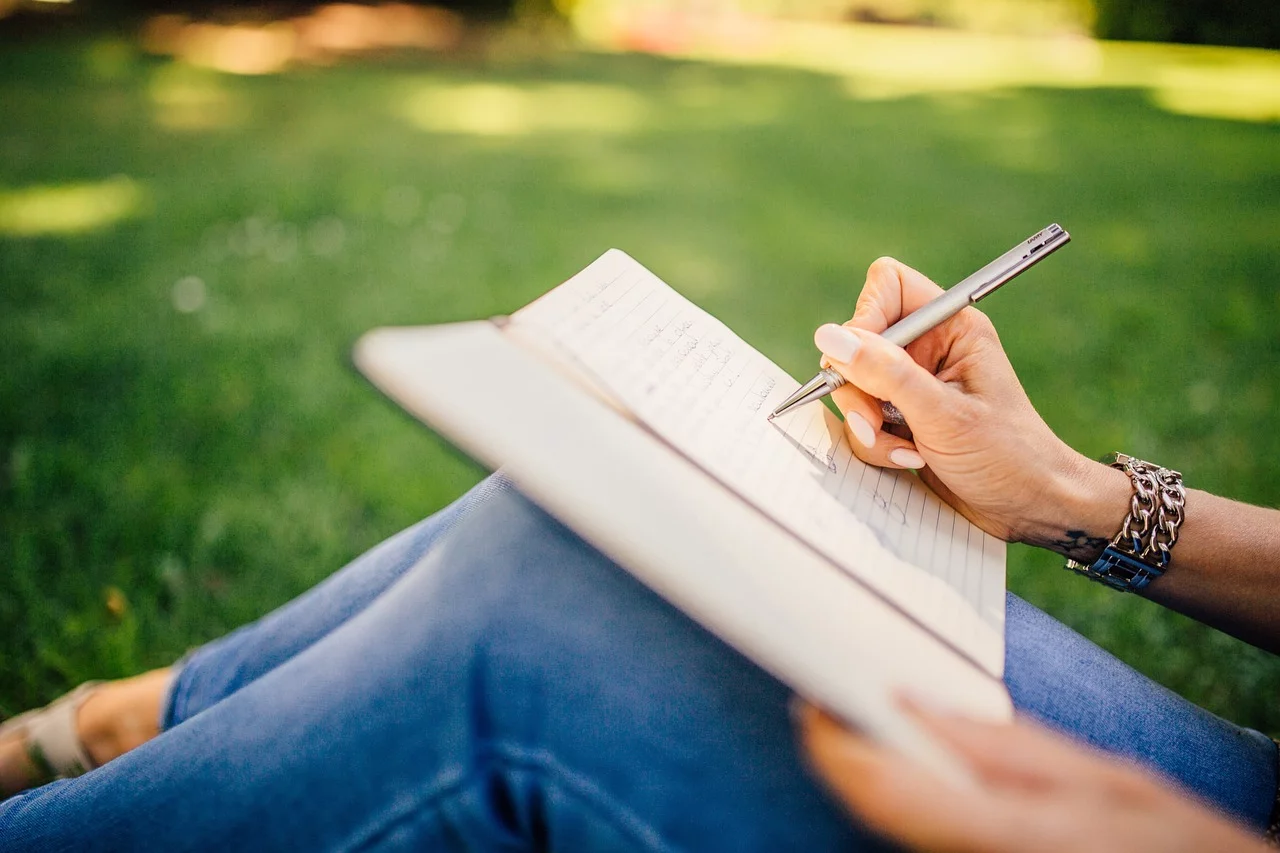
- Write by hand if you can. Something about pen and paper slows you down just enough to let ideas form properly. If typing is more practical, at least turn off spell check so the red lines don't break your flow.
- Don't start with "I see a picture of..." Jump straight into the scene, the emotion, or the story. The picture is a launching pad, not the destination.
- Share your work. Writing prompts lose power when they stay private forever. Read yours aloud to someone, or swap responses with another writer. The feedback loop is where growth happens.
Why Random Pictures Work Better Than Written Prompts
Traditional writing prompts tell you what to write about. "Write a story about a lost dog." "Describe your favorite childhood memory." They're fine, but they put you on rails. You know where the prompt is pointing before you even start.
Random pictures do the opposite. A photo of a sunset over water could inspire a love story, a farewell scene, a travel essay, or a meditation on time. The same image generates completely different writing from different people, and different writing from the same person on different days. That's what keeps the exercise fresh.
Visual prompts also activate different parts of your brain than text prompts do. When you read words, your language centers process them. When you look at a picture, your visual cortex, emotional centers, and memory networks all light up simultaneously. More brain involvement means richer material to write from. It's not a writing hack - it's just how human cognition works.
If you want to build a daily writing practice, random picture exercises are one of the most reliable ways to do it. Generate an image each morning, set a timer, and write. After a month, you'll have 30 pieces of writing that wouldn't exist otherwise - and your ability to start from nothing will be noticeably stronger.
Ready to start? Head to the Random Picture Generator and grab your first image. Your story is already in there. You just have to find it.