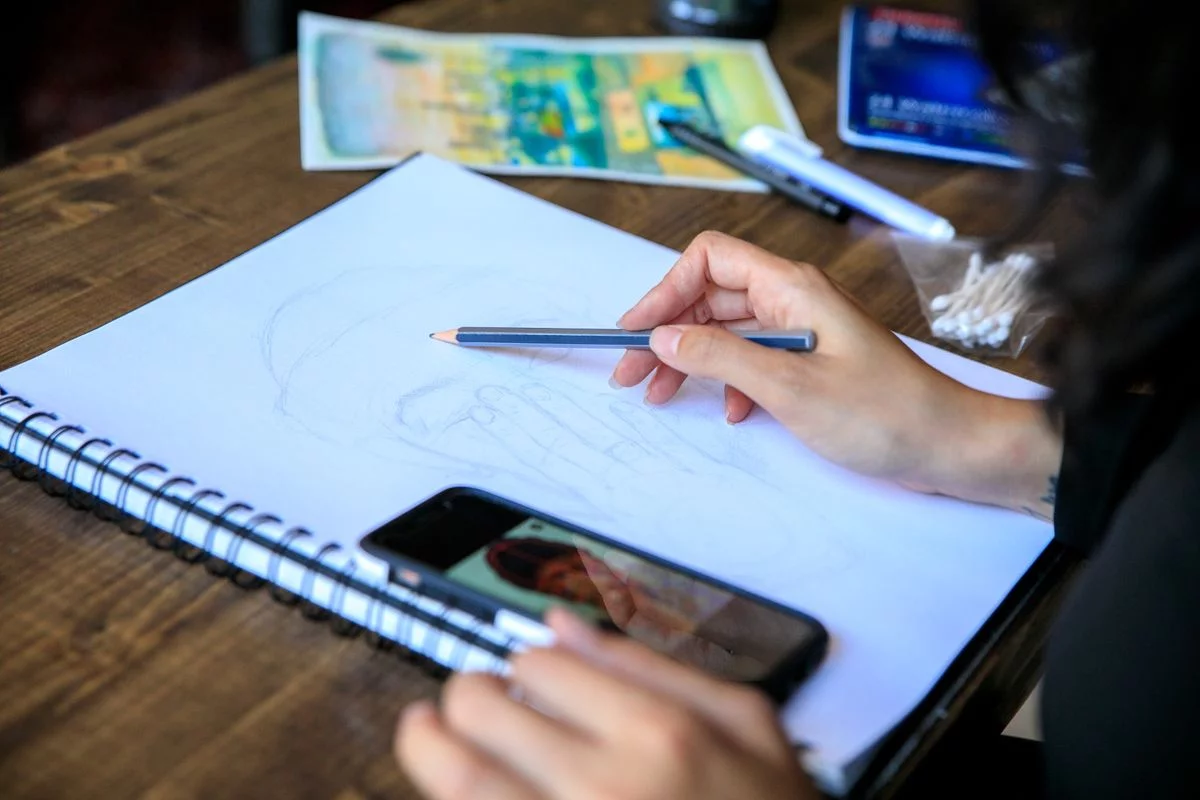
Using Random Pictures as Drawing References for Artists
Most artists know they should draw from reference. And most artists spend too long looking for the perfect reference. You open a browser tab to find a horse mid-gallop and thirty minutes later you're still scrolling through stock photo sites, comparison shopping between nearly identical poses. The drawing never starts.
Random images short-circuit that paralysis. You get a subject, you draw it. No curation, no second-guessing, no waiting for inspiration to hand you something perfect. Just a horse or a flower or an architectural facade that you didn't expect and now have to figure out how to put on paper. This constraint is genuinely useful, and a lot of working artists have figured that out.
Why Reference Photos Matter (Even If You Hate Them)
There's a persistent idea in some corners of the art world that drawing from reference is cheating, or that real artists draw purely from imagination. This is mostly wrong. Most professional illustrators, concept artists, and fine art painters work from reference constantly. The goal isn't to copy - it's to feed your visual library.
Your brain stores information about how things look, but that storage is lossy and shaped by your existing habits. When you draw a hand from memory, you draw the hand you've drawn a thousand times before, with the same proportions you always approximate, the same mistakes you always make. When you draw a hand from a photograph, you're forced to engage with actual anatomy - the specific bend of this particular knuckle, the way the shadow falls when a wrist is rotated this way.
Over time, that observational practice reshapes your mental library. The goal isn't to copy the reference; it's to extract information that you genuinely couldn't have imagined accurately. Your drawings from imagination get better because you've taught your brain what things actually look like.
Random images push this further because they remove your subject preferences from the equation. Left to your own choices, most artists drift toward drawing the same subjects they already feel comfortable with. You like drawing cats so you draw more cats and you get better at cats, but your understanding of birds or mountain landscapes or vehicle perspectives stays weak. Random references force you into unfamiliar territory, which is exactly where skill development happens fastest.
Gesture Drawing: The Best Use Case for Random Photos
Gesture drawing - quick sketches that capture movement and weight rather than precise detail - is one of the most effective drawing exercises there is. It trains you to see the essential flow of a subject before your hand gets bogged down in rendering. And random images are almost perfectly suited to it.
The classic gesture drawing practice works like this: you look at a reference for 30 seconds, 1 minute, or 2 minutes, then draw as much as you can in that time. The time limit prevents overworking and forces you to prioritize. What's the most important line in this image? What conveys the weight and direction of this form?
Random images work well for this because the variety keeps you alert. If you're using a site that only shows figure poses, you start anticipating the format and your gestures get mechanical. A random picture generator might give you a person, then a lion mid-stride, then a horse grazing, then a cityscape. Each one demands a completely different approach, which keeps your observational instincts sharp.
Set a timer for 30 or 60 seconds per image. Don't trace - look at the image, then draw. You're building the connection between visual input and hand movement, and that only works if your eyes and hand have to coordinate without the crutch of tracing.
Value Studies: Training Your Eye for Light and Shadow
Value - the relative lightness or darkness of different areas in a composition - is one of the most important and most commonly underdeveloped skills in drawing and painting. A lot of artists have good line work but flat, unconvincing shading because they've never systematically practiced reading and reproducing values.
Random images are excellent for value studies because they give you an endless supply of varied lighting situations. A sunset will have a completely different value structure from a midday ocean scene. A shadowed building facade has different challenges than a brightly lit plate of food.
The exercise: take a random image and create a quick value sketch using only three values (light, mid, dark) or five values if you're further along. No line work - just shapes of value. The goal isn't to make a detailed drawing. It's to train yourself to squint at an image and immediately see the underlying value structure that makes it read as three-dimensional.
One useful variation is to convert your reference to grayscale before drawing it. This removes the distraction of color (which often leads artists to confuse hue saturation with lightness) and shows you the raw value information. You can do a quick image search in grayscale mode, or just mentally squint at a colored image until the colors blur and you're only seeing the relative dark/light pattern.
Blind Contour Drawing from Random Images
Blind contour is a training exercise where you draw the outline of a subject without looking at your paper. Your eyes move slowly along the edges of the reference image and your hand follows, recording what your eyes see in real time. The resulting drawing is usually a mess - wobbly, disproportionate, sometimes barely recognizable. That's fine. The point is the process, not the product.
What blind contour trains is the eye-hand coordination that underlies all observational drawing. Most drawing errors don't come from not knowing what something looks like. They come from the hand moving faster than the eye, filling in shapes from memory before observation has a chance to catch up. Blind contour forces you to slow down and actually look.
Random images work particularly well for this because you're not precious about them. If you've specifically chosen a beautiful reference photo you've been wanting to draw, blind contour feels like a waste. If a random image gives you a butterfly you weren't expecting, running a blind contour study on it feels like a reasonable warmup exercise rather than a missed opportunity.
Try spending 10-15 minutes on blind contour at the start of a drawing session, using 3-4 random images. By the time you move to your main drawing work, your observational instincts are firing.
Working with Specific Categories
Part of what makes random image generators useful is the ability to control the category while keeping individual images unpredictable. You can choose to work on animal anatomy for a session by pulling from the animal generators, or focus on landscape composition by cycling through nature categories. The randomness within each category gives you variety without completely losing the focus.
Animals and Creature Drawing
Animal anatomy is one of the harder subjects to learn because most people have limited direct observation access to interesting animals. You can walk outside and look at a pigeon, but lions, horses, and birds of prey require zoo trips or luck. Random images give you an endless supply of varied animal subjects in different positions and lighting conditions. Focus on understanding underlying structure - where are the joints? How does the spine connect to the limbs? How does weight shift when an animal is walking versus standing? Spend a session just drawing the same type of animal from multiple random references until you feel the underlying form becoming automatic.
Landscape and Environment
Mountains, oceans, sunsets, and cityscapes each present different compositional challenges. Landscape drawing is fundamentally about depth and atmosphere - how do you convey that some things are far away and some are close? How do you suggest miles of distance with marks on paper? Working from random landscape images trains your eye for the specific visual cues that create spatial depth: atmospheric haze, scale relationships, diminishing contrast, edge quality. Try a series where you draw the same compositional type (horizon-focused, or foreground-dominant, or wide-angle city view) across six random images, then compare what changed and what you naturally kept consistent.
Still Life and Objects
Random food images, flower arrangements, and architectural details make good still life references. The advantage over setting up an actual still life is variety - you're not drawing the same apple in the same light for the fifth time. The advantage over searching for still life references is speed - you get whatever comes up, which forces you to apply still life thinking (composition, light direction, texture) to unexpected subjects.
Figure and People Drawing
Random people images can supplement structured figure drawing practice. They're particularly useful for studying clothed figures, everyday poses, and hands - all areas that dedicated figure drawing sites tend to underrepresent. The lighting and setting in casual photography is different from studio poses, which trains different observational skills. A photo of someone sitting at a table in natural window light is harder to draw than a clean studio pose, and harder means more learning.
Building a Random Reference Drawing Practice
The most common mistake artists make with reference drawing is treating it as something that happens when inspiration strikes. You get better at drawing by drawing consistently, and random references are useful because they remove the friction of deciding what to draw.
A simple daily structure that actually works:
- 5 minutes of gesture drawing. Pull 5-8 random images from the generator, spend 30-60 seconds on each. Don't judge the results. This is warmup, not finished work.
- 15-20 minutes of focused study. Pick a category relevant to something you're currently working on or want to improve. Draw from 2-3 random images in that category, spending real time on each one - longer than you're comfortable with. The discomfort of staying with a difficult subject is where growth happens.
- Occasional value or blind contour studies. Maybe once a week, replace the focused study with a pure technical exercise - all value, no line, or blind contour only.
The consistency matters more than the duration. Twenty minutes every day produces more skill growth than two hours once a week. The daily habit keeps your observational instincts warm and compounds over time in a way that sporadic sessions don't.
What Makes Random References Different from Reference Apps
There are dedicated apps for drawing references - SenshiStock on DeviantArt, Line of Action, SketchDaily, and others. These are legitimate tools with real advantages, especially for figure drawing where you need specific pose types and timed sessions. But random image generators offer something different.
Reference apps are optimized for one type of drawing practice. Line of Action is great for figures and faces. If you want to practice drawing water or buildings or food with the same structured timed approach, those apps don't help you. Random image generators cover everything - every subject type, every category, and enough variety that you'll encounter genuinely unexpected combinations.
There's also a psychological benefit to the randomness. Apps that are specifically designed for artists often make you feel like you're doing formal training, which can feel like pressure. A general random image tool feels more casual. You're just looking at pictures and drawing. That lower-stakes framing helps some artists stay loose and experimental instead of tightening up and overworking everything.
The random element also forces healthy humility. When you choose your own references, you naturally gravitate toward subjects you can handle - safe choices that show your strengths. Random images don't care what your strengths are. You might get a space image full of complex light effects you don't know how to handle, or a butterfly with intricate wing patterns. The failure and struggle that come from unfamiliar subjects are uncomfortable and also where your skills develop the most.
Tips for Getting More Out of Random Reference Drawing
A few specific approaches that make random reference practice more effective:
- Draw before you analyze. When you get a random image, resist the urge to study it for several minutes before drawing. Make at least a quick initial sketch from your first impression, then look more carefully for a second pass. The first impression drawing shows you what you instinctively grabbed versus what you missed.
- Name what's hard. After each drawing, spend 30 seconds identifying the specific element that gave you the most trouble - was it the foreshortening? The light direction? The texture? Naming the difficulty helps you track what you actually need to work on, rather than just having a vague sense that the drawing didn't go well.
- Keep the bad drawings. The gesture drawings that look terrible at 30 seconds are data. Keep them in the same sketchbook as your more finished work and date them. Six months later, looking at those bad gestures is one of the best ways to see how much your observational instincts have improved.
- Combine with imagination. After drawing from a random reference, close the image and draw the same subject from memory, making changes. A random lion becomes the basis for an imaginary creature with those bone structure proportions. A random mountain landscape becomes the setting for a scene you're developing. The reference feeds your imagination rather than replacing it.
- Use variety as the point. If you've done three flower references in a row, switch categories. The value in random drawing practice is encountering subjects that don't fit your existing patterns. If you find yourself recreating those patterns by sticking to comfortable categories, deliberately generate something outside your usual range.
Starting Today
You don't need new materials, a different studio setup, or a structured course. Open the random picture generator, set a 30-second timer, and draw whatever comes up. Do it five times. That's a complete warmup session that will take you about four minutes and start building observational habits that compound over months.
The artists who improve consistently aren't the ones waiting for perfect conditions or the perfect reference. They're the ones drawing today, with whatever is in front of them. A random image gives you a subject with zero friction - no searching, no deciding, no excuses. Just something to look at and a reason to draw.
For more ways to use random images in creative practice, check out our random picture writing prompts or how to use random pictures in the classroom for teaching observation and creativity. If you want ideas for creative challenges, our random photo challenge ideas give you structured prompts for building a daily practice. The same observational focus that makes reference drawing effective also strengthens visual recall - see our guide on using random images for memory and brain training if you want to put that attention to work in a different way.